This blog has been created by Kaiqiang Liu Qin as an integrated project for the 1st year. Degree taught at the Polytechnic School of the "Universidad Europea de Madrid". Academic Year 2013-2014.

http://politecnica.universidadeuropea.es/

martes, 8 de abril de 2014

Saying NO.


It is very important to say NO.

The word 'no' is as bare as powerful. Two letters that, together, become one of the most feared combinations in our vocabulary.
Its mere mention is enough to destroy dreams, breaking hearts and demolish expectations.

But the particle that allows us to set limits, like distances, adjust our tempos and respect our needs.
And it is a challenge we face every day.

We live in a world that is idealized, when a person gives it categorizes as "good", and once a person denies something is categorized as a "bad person" and indeed, when we say no, until we ourselves feel guilty why is it so hard, because the guilt remains in us and makes us feel bad.

But say yes to everything is another problem, that all should come to ask favors because they know that your answer is always the same, and always will be no matter what you to solve the problem, you get them out of doubt ... But everyone has a limit to come sooner or later, and when they explode, so you have to learn to say no, maybe just for our basic principles.

The importance of saying no, is that you will be more respected as you have clear your principles and when you have to say yes and when you have to say no...


Assertiveness.

As a communication style and strategy, assertiveness differentiates and stands at a midpoint between two other polar behaviors: aggression and passivity. An assertive person is one who says with certainty.

Defined as a communicational behavior in which the person does not harm or submits to the will of others, but expresses his convictions and defend their rights.

It is worth mentioning that assertiveness is a behavior of people, behavior.
It is also a form of conscious, consistent, clear, direct, balanced expression, whose purpose is to communicate our ideas and feelings or defend our legitimate rights without the intent to injure or harm, acting from an inner state of confidence, instead of emotionality typical limiting anxiety, guilt or anger.

Some specialists say that assertive people have such characteristics as:


- Go and accept reality 
- Act and speak based on facts and objectives 
- Makes decisions by choice 
- Accept your mistakes and successes 
- He uses his personal skills with taste 
- It is assertive, while being gentle and considerate 
- It is not aggressive; is willing to lead, and to let others direct it 
- You can grow, develop and succeed without resentment 
- Allow others to mature, develop and succeed 
- Ask for what you need, says what he thinks and expresses his feelings with respect


Techniques of assertiveness can vary widely, some of them are:

The "broken record" technique consists of simply repeating your requests or your refusals every time you are met with resistance. As with a broken record, the key to this approach is repetition ... where your partner will not take no for an answer.

Fogging consists of finding some limited truth to agree with in what an antagonist is saying. 

Negative inquiry consists of requesting further, more specific criticism.

Negative assertion is agreement with criticism without letting up demand.


lunes, 7 de abril de 2014

Communication Styles.

There are 4 types of communication styles: 


- Passive
- Aggressive
- Passive-Aggressive
- Assertive

1. Passive.

PASSIVE COMMUNICATION is a style in which individuals have developed a pattern of avoiding expressing their opinions or feelings, protecting their rights, and identifying and meeting their needs. Passive communication is usually born of low self-esteem. These individuals believe: “I’m not worth taking care of.
As a result, passive individuals do not respond overtly to hurtful or anger-inducing situations. Instead, they allow grievances and annoyances to mount, usually unaware of the build up. But once they have reached their high tolerance threshold for unacceptable behavior, they are prone to explosive outbursts, which are usually out of proportion to the triggering incident. After the outburst, however, they feel shame, guilt, and confusion, so they return to being passive.

2. Aggressive.

AGGRESSIVE COMMUNICATION is a style in which individuals express their feelings and opinions and advocate for their needs in a way that violates the rights of others. Thus, aggressive communicators are verbally and/or physically abusive. Aggressive communication is born of low self-esteem often caused by past physical and/or emotional abuse, unhealed emotional wounds, and feelings of powerlessness.

3. Passive-Aggressive.

PASSIVE-AGGRESSIVE COMMUNICATION is a style in which individuals appear passive on the surface but are really acting out anger in a subtle, indirect, or behind-the-scenes way. Prisoners of War (POWs) often act in passive-aggressive ways to deal with an overwhelming lack of power. POWs may try to secretly sabotage the prison, make fun of the enemy, or quietly disrupt the system while smiling and appearing cooperative.People who develop a pattern of passive-aggressive communication usually feel powerless, stuck, and resentful they feel incapable of dealing directly with the object of their resentments.  Instead, they express their anger by subtly undermining the object of their resentments. They smile at you while setting booby traps all around you.

4. Assertive.

ASSERTIVE COMMUNICATION is a style in which individuals clearly state their opinions and feelings, and firmly advocate for their rights and needs without violating the rights of others. Assertive communication is born of high self-esteem. These individuals value themselves, their time, and their emotional, spiritual, and physical needs and are strong advocates for themselves while being very respectful of the rights of others.




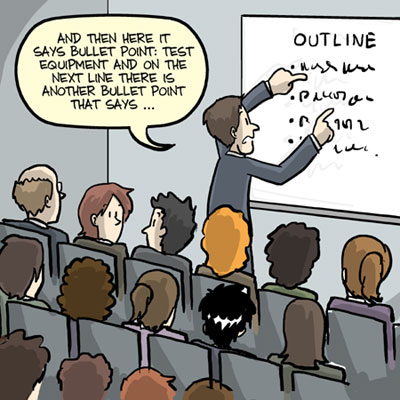
Introduction to Technical Writing.

Technical writing is a field of professional writing on technical subjects. It is quite different from fiction or journalism. Fiction includes poetry, short stories, plays and novels. 

The goal of expressive writing is to express one's feelings through description and narration. However, if we want to read about rocket science or brain surgery, we need a technical writer to tell us exactly what they mean.

Technical writing aims to get work done, to change people by changing the way they do things.
Writing which helps in completing the work is a key part in all professions. Technical writing is a good field with a lot of growth and income potential.

The principles of the Technical writing are those:


  1. Preparation
  2. Research
  3. Organization
  4. Writing a draft
  5. Revision
Technical writing requires preparation, such as, establishing the purpose of the document, assessing the audience, determining the scope, selecting the appropriate medium.


Opening and closing of an oral presentation.

The main thing to start and end an oral presentation is to be formal, without colloquial expressions.

One important thing in an oral presentation is the opening and the ending, because there is when you catch the attention of the audience.

You can begin by highlighting the topics of which are to speak, inviting the public to take an interest in it, but make it more enjoyable without breaking the formality of the presentation.

To finish and close the presentation, you can invite the public to ask some questions about the presentation or some questions that are left ... A brief conclusion of the topic and finally thank the audience for listening to the presentation and have interested in it.


domingo, 6 de abril de 2014

PechaKucha Presentations.


PechaKucha is a presentation format in a creative way in which work simply and informally
discussed. 
Is a simple presentation format where you show 20 images, each for 20 seconds.
The images advance automatically and you talk along to the images.
The format, which keeps presentations concise and fast-paced, powers multiple-speaker events called PechaKucha, it was invented by Astrid Klein and Mark Dytham. 

Good PechaKucha presentations are the ones that uncover the unexpected, unexpected talent, unexpected ideas. Some PechaKuchas tell great stories about a project or a trip. Some are incredibly personal, some are incredibly funny, but all are very different. 

The basic idea behind PechaKucha is to allow sharing of diverse ideas overnight presenters, maintaining a high level of interest and attention by very concise presentations. This format PechaKucha was created: each presenter is allowed to use images or 20 slides, each of which is shown for 20 s. In total, each presentation runs for 6 minutes and 40 seconds, after which it pauses briefly and the next presenter takes the stage. Each event typically consists of 14 presentations.


This exhibition format is used as a tool to conduct presentations of limited duration: force the presenter to concentrate on the message, allows uninterrupted performance and avoids the tedium and boredom that often cause long slide presentations based on attendees .